
Born into poverty in segregated America, she fled the United States to become Paris’s biggest sensation, the world’s first Black megastar, an international spy, and a civil rights pioneer. She did not just perform; she shattered the boundaries of what a Black woman, and an artist, could achieve.
Here is the incredible story of “La Baker,” the woman who rewrote the rules of stardom.
1. Escaping the American Nightmare
Born Freda Joséphine McDonald in St. Louis, Missouri, in 1906, Baker’s early life was defined by extreme poverty and racial terror. She witnessed the horrific St. Louis race riots of 1917, an event that scarred her deeply and fueled her lifelong fight against racism.
By age 13, she was working as a waitress and street performer. Dancing became her ticket out. She joined a vaudeville troupe and eventually made her way to New York City during the Harlem Renaissance, performing in the landmark all-Black musical Shuffle Along. But America’s rigid Jim Crow laws capped her potential. She knew she had to leave.
2. Unveiling a Megastar in Paris
In 1925, at just 19 years old, Baker sailed to Paris to perform in La Revue Nègre. Paris was experiencing a post-WWI obsession with jazz and African culture, and Baker was unlike anything European audiences had ever seen.
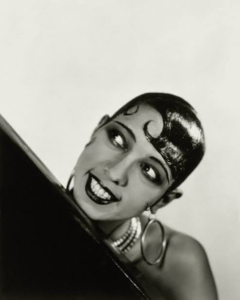
She became an overnight sensation at the Théâtre des Champs-Élysées. Her performances were an intoxicating mix of raw energy, comic facial expressions, and jaw-dropping choreography. When she performed her famous “banana dance” at the Folies Bergère—wearing nothing but a skirt made of artificial bananas—she cemented her status as an icon of the Jazz Age.
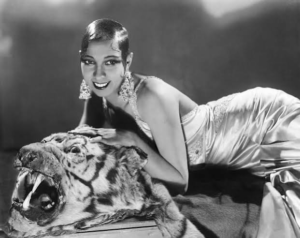
By the 1930s, she was the highest-paid female performer in the world. Picasso painted her, Hemingway drank with her, and Christian Dior designed her clothes. She bought a French chateau, walked her pet cheetah down the Champs-Élysées, and officially became a French citizen in 1937.
3. From the Stage to the Shadows: The WWII Spy
When World War II broke out and Nazi Germany occupied France, Baker refused to sit on the sidelines. Recruited by the French military intelligence agency (Deuxième Bureau), she became a high-profile spy for the French Resistance.
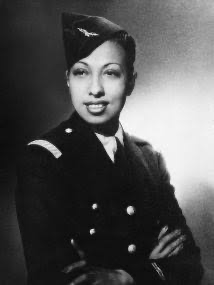
Her megastar status was the perfect cover. She attended glamorous parties at Italian and Japanese embassies, gathering information on Axis troop movements without ever raising suspicion. She transmitted secret messages written in invisible ink on her sheet music and pinned notes inside her underwear.
For her immense bravery, France later awarded her the Croix de Guerre and the Rosette de la Résistance, and made her a Chevalier of the Légion d’honneur—the country’s highest civilian and military honors.
4. Returning to America as a Crusader
While Europe worshipped her, her homeland still refused to treat her as human. When Baker returned to the US to perform in the late 1930s and 1950s, she was refused service at hotels and racially abused by the press.
Instead of backing down, Baker used her global platform to fight. She refused to perform for segregated audiences, successfully forcing clubs from Miami to Las Vegas to integrate.
In 1963, she stood alongside Martin Luther King Jr. at the historic March on Washington. Wearing her French Resistance uniform, she was the only official female speaker that day. She told the crowd:
“I have walked into the palaces of kings and queens and into the houses of presidents. And much more. But I could not walk into a hotel in America and get a cup of coffee, and that made me mad.”
5. The Rainbow Tribe and Final Legacy
Baker’s vision of a raceless world extended to her personal life. She adopted 12 children from different corners of the globe—including Korea, Japan, Colombia, Finland, and Algeria—calling them her “Rainbow Tribe.” She raised them at her estate in southwestern France to prove that people of all races and religions could live together as brothers.
On April 12, 1975, just days after premiering a retrospective show in Paris celebrating her 50 years in show business, Baker passed away from a cerebral hemorrhage. She was buried in Monaco with full military honors.
In 2021, France paid her the ultimate tribute by inducting her into the Panthéon in Paris, making her the first Black woman in history to enter the mausoleum reserved for the nation’s greatest heroes.
Why Joséphine Baker Matters Today
Joséphine Baker was a futurist. She looked at a deeply divided, heavily segregated 20th century and chose to live her life as if the barriers of race, gender, and nationality didn’t exist. She invented the blueprint for the modern, multi-hyphenate superstar—proving that an artist’s voice is most powerful when it is used to fight for human dignity.