

The Night Paris Learned to Swing: Inside the Wild, Freedom-Fueled 1920s Jazz Age
Author: theeditor | Category: Uncategorized
Imagine stepping off a steamship after a long Atlantic crossing, walking down a cobblestone street, and hearing a saxophone blaring from a basement window. The air smells like unfiltered cigarettes, expensive perfume, and cheap wine.
Welcome to Paris in the 1920s—or as the locals called it, Les Années Folles (The Crazy Years).
For a brief, dazzling decade, Paris wasn’t just the capital of France; it was the capital of the world’s cool. While the United States was locked down by the strict laws of Prohibition and the harsh realities of Jim Crow, Paris opened its arms, poured the champagne, and let the jazz play all night long.
Here is how a generation of rebels, expats, and musical geniuses changed the cultural landscape forever.
How the Music Arrived (Blame the Harlem Hellfighters)
Jazz didn’t just drift across the ocean by accident. It arrived with a bang during World War I.
The 369th Infantry Regiment, famously known as the Harlem Hellfighters, was an African American unit that fought on the front lines. But they brought more than just military prowess—they brought their brass band, led by the legendary James Reese Europe.
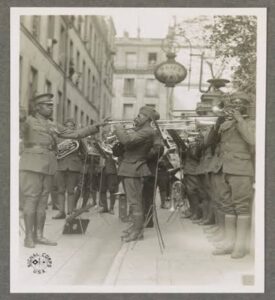
The Harlem Hellfighters band, credited with bringing early jazz to French soil (Source: Public Domain/Library of Congress)
When they marched through French towns playing syncopated ragtime rhythms, the local crowds went wild. The French had never heard anything like it. By the time the war ended in 1918, the seeds of a musical revolution had been planted.
Escaping America for the Left Bank
Why did so many American musicians—particularly Black artists—pack up and move to Europe permanently? The answer is simple: freedom.
In Paris, Black musicians could ride the metro, stay in high-end hotels, dine in restaurants, and perform on mainstream stages without the threat of segregation. While France certainly wasn’t a perfect utopia, the bohemian society of Paris judged these artists by their talent rather than the color of their skin.
A vibrant, self-sustaining community of Black expats quickly took root in the hilly neighborhood of Montmartre, earning it the nickname “The Black Pearl of Paris.”
The Titans of the Parisian Night
If you were club-hopping in Montmartre in 1925, these are the icons you would have run into:
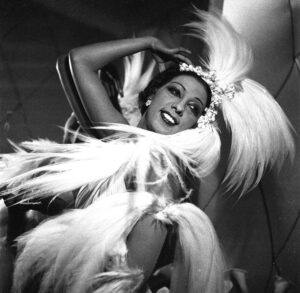
Josephine Baker in 1920s Paris
- Josephine Baker: The undisputed queen of the era. She shocked and delighted Paris with her uninhibited dancing, comic timing, and fierce intelligence. She went from an exoticized stage performer to a wealthy, highly influential global superstar and French Resistance hero.
- Ada “Bricktop” Smith: A vaudeville performer turned legendary saloon keeper. Her club, Bricktop’s, was the ultimate VIP lounge of the 1920s. If you were anyone—from a European prince to a broke writer—you went to Bricktop’s to drink, gossip, and listen to her sing.
- Sidney Bechet: A brilliant clarinet and saxophone virtuoso whose fiery, improvisational style rivaled Louis Armstrong. Bechet loved Paris so much he eventually made it his permanent home.
Where the Lost Generation Met the Jazz Age
The magic of 1920s Paris was the collision of different creative worlds. The jazz clubs weren’t just for music lovers; they were the living rooms for the world’s greatest writers and painters.
On any given night at a club like Le Grand Duc, you might spot a young, broke Ernest Hemingway sipping a whiskey in the corner. You’d see F. Scott and Zelda Fitzgerald dancing on tables, or Gertrude Stein arguing about modern art with Pablo Picasso.
The syncopated, improvised rhythm of jazz didn’t just stay on the stage—it bled into the literature, painting, and fashion of the entire decade.
The End of the Party
Like all great parties, the Parisian Jazz Age couldn’t last forever. The Wall Street crash of 1929 dried up the American money that fueled the expat scene, and by the 1930s, the shadow of World War II began to loom over Europe.
But for one beautiful, chaotic decade, Paris showed the world what happens when you mix total artistic freedom with a relentless, swinging beat. The echo of those midnight saxophone solos can still be heard in the cafes of Montmartre today.
Published: November 10, 2026


